
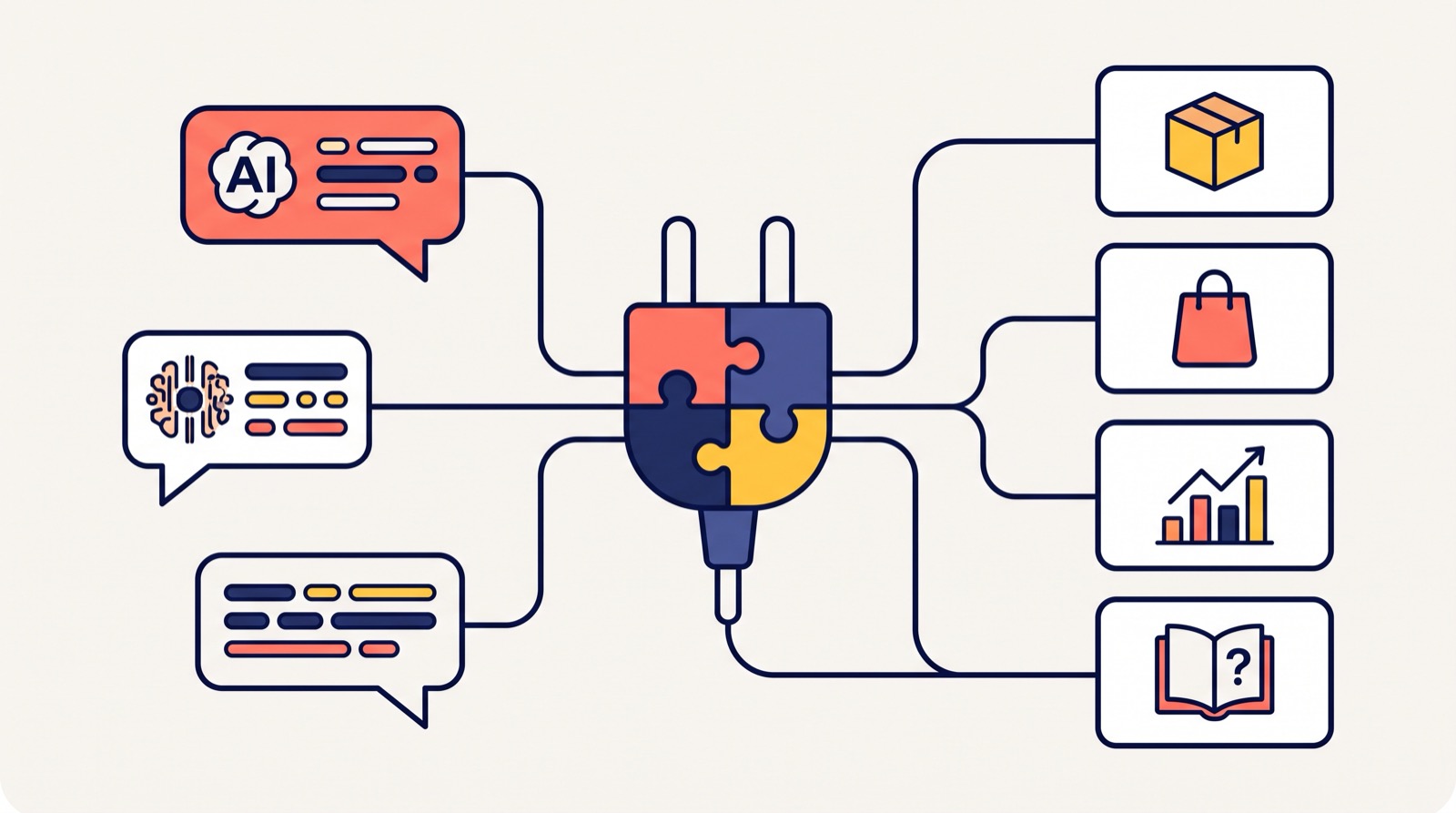
Not long ago an AI assistant knew only what you pasted into the chat. Want ChatGPT to analyze sales? Export a spreadsheet, copy it, explain what each column means and hope it does not mix anything up. MCP changes this: the assistant contacts the right system itself, takes fresh data and answers. At Turboshop we built an MCP server into our e-commerce platform, so we explain what it is to clients every day. Here are the answers in one place — in plain words, no programming.
MCP in plain words
MCP (Model Context Protocol) is an open standard describing how an AI assistant connects to external systems: an online store, a CRM, a knowledge base, a calendar. The handiest analogy is the USB-C port. Devices used to have their own cables; now one port fits a laptop, a phone and headphones. In the same way, before MCP every AI service had separate, incompatible ways to connect. Now a system that "speaks" MCP connects to Claude, ChatGPT, Cursor and other assistants the same way.
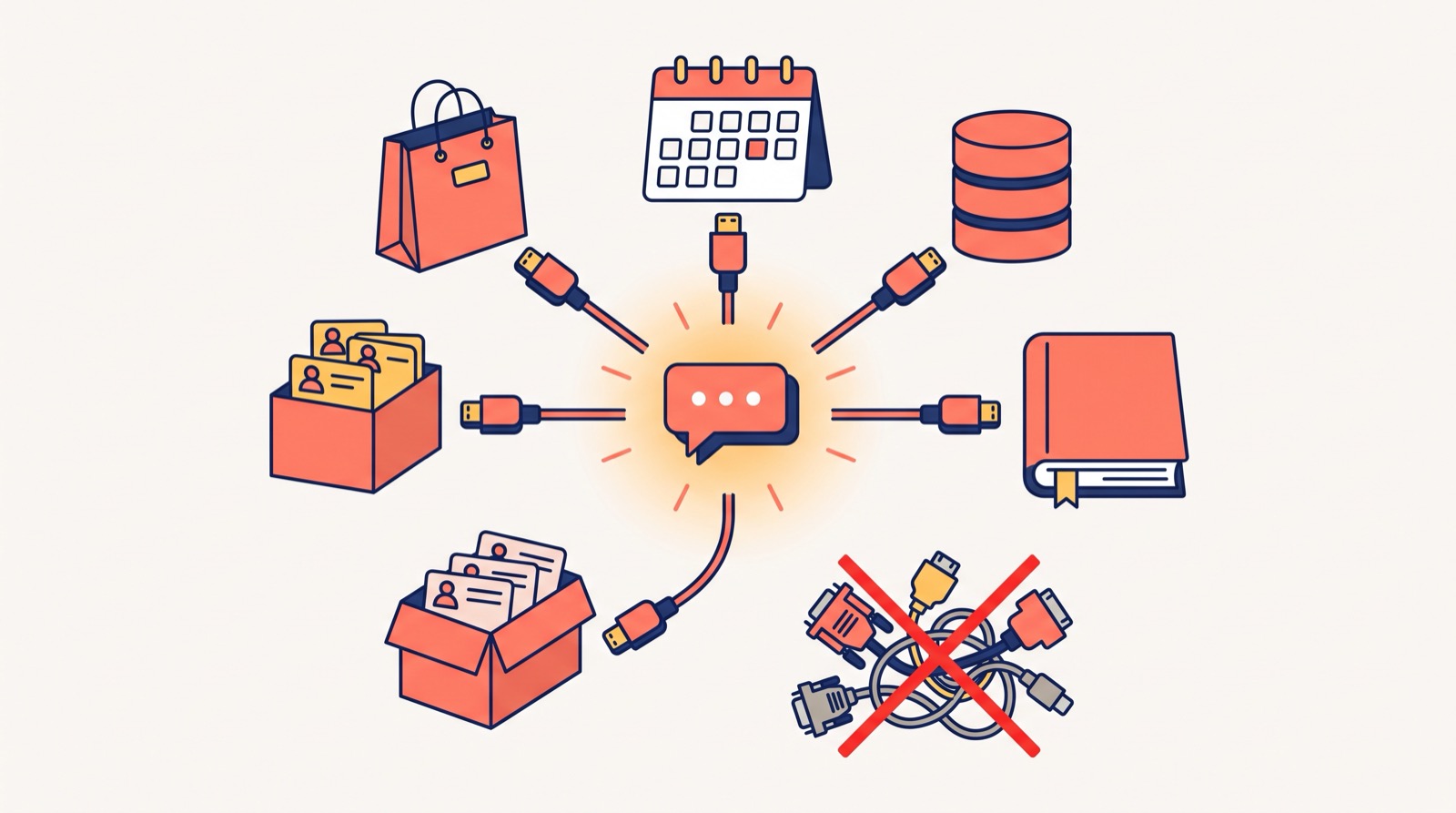
The standard was proposed by Anthropic, the developer of Claude, and made open. Other major AI players later added MCP support, including OpenAI in ChatGPT. That is why MCP became a common language between AI assistants and business systems rather than a feature of a single service.
How an MCP server works
Every MCP connection has two sides:
- The client — the AI assistant where you ask questions: Claude, ChatGPT, Claude Code, Cursor.
- The MCP server — the system the assistant connects to. For example, your online store.
The server tells the assistant what it can do. MCP has three kinds of capabilities for that:
- Tools — actions the assistant can call: "give me a sales summary for a period", "find products that are running out". Each tool has a description and a list of parameters, so the assistant understands when to call which one.
- Resources — reading material, such as help articles.
- Prompts — ready scenarios like "make a morning brief" or "weekly report", which already specify which tools to call and how to shape the answer.
The rest happens on its own. You type: "What will run out of stock in two weeks?". The assistant picks the stock forecast tool, passes parameters, gets ready figures from the server and phrases the answer in human language. You do not see a single request — only the result.
How MCP differs from a regular API
An API also gives access to a system's data, but it is built for programmers: someone has to write code, handle formats and errors. MCP is a layer on top, built for the AI assistant. The difference for a business:

- No developer needed for every question. With an API, every new report is a new task for a programmer. With MCP you simply ask a different question.
- The assistant understands what it receives. A good MCP server does not just return numbers but explains what they include: what "paid" means, whether canceled orders count, which currency the amounts are in.
- A person controls access. The standard provides sign-in via OAuth: the owner explicitly allows access and can revoke it at any time, without handing over keys.
What MCP gives an online store
For a store owner MCP means one thing: analytics without exports. Typical questions the assistant answers in a minute:
- how many orders and how much money this week versus last, and how much of it is actually paid;
- which products will run out soon, and what has already sold out but is still in demand;
- which categories, cities, hours and ad campaigns bring sales;
- who abandoned a cart and whom you can contact;
- where the store is losing money right now: paid but unprocessed orders, failed payments, unshipped parcels;
- which products lack a description, photos or SEO meta tags.
We showed what this looks like in practice, with real answers from the demo store, in "An AI assistant for your online store".
Risks: why not every MCP server is equally useful
MCP is an open standard, so anyone can write an MCP server. Unofficial servers by enthusiasts already exist for popular platforms. They can be useful, but an owner should understand what they hand over:
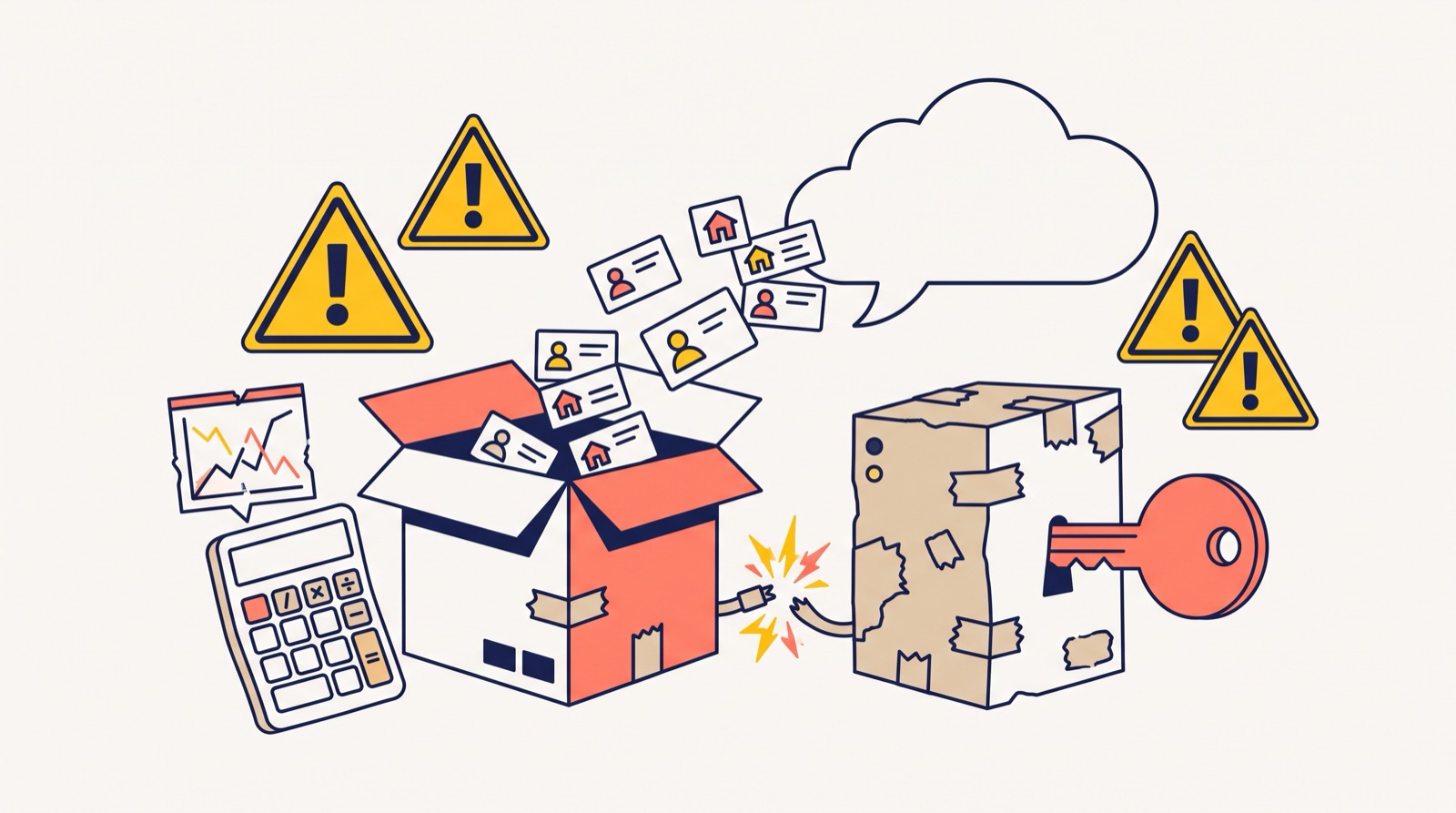
- Full access via an API key. A home-made server often runs on a key that opens everything, including the right to change data.
- Customer personal data. Phones, addresses and names can reach the AI service unmasked.
- Its own math. If the server returns raw data, the assistant computes revenue itself — and the result may not match your admin panel.
- Nobody is accountable. After a platform update an unofficial server may quietly stop working.
Checklist: how to choose a safe MCP server for a store
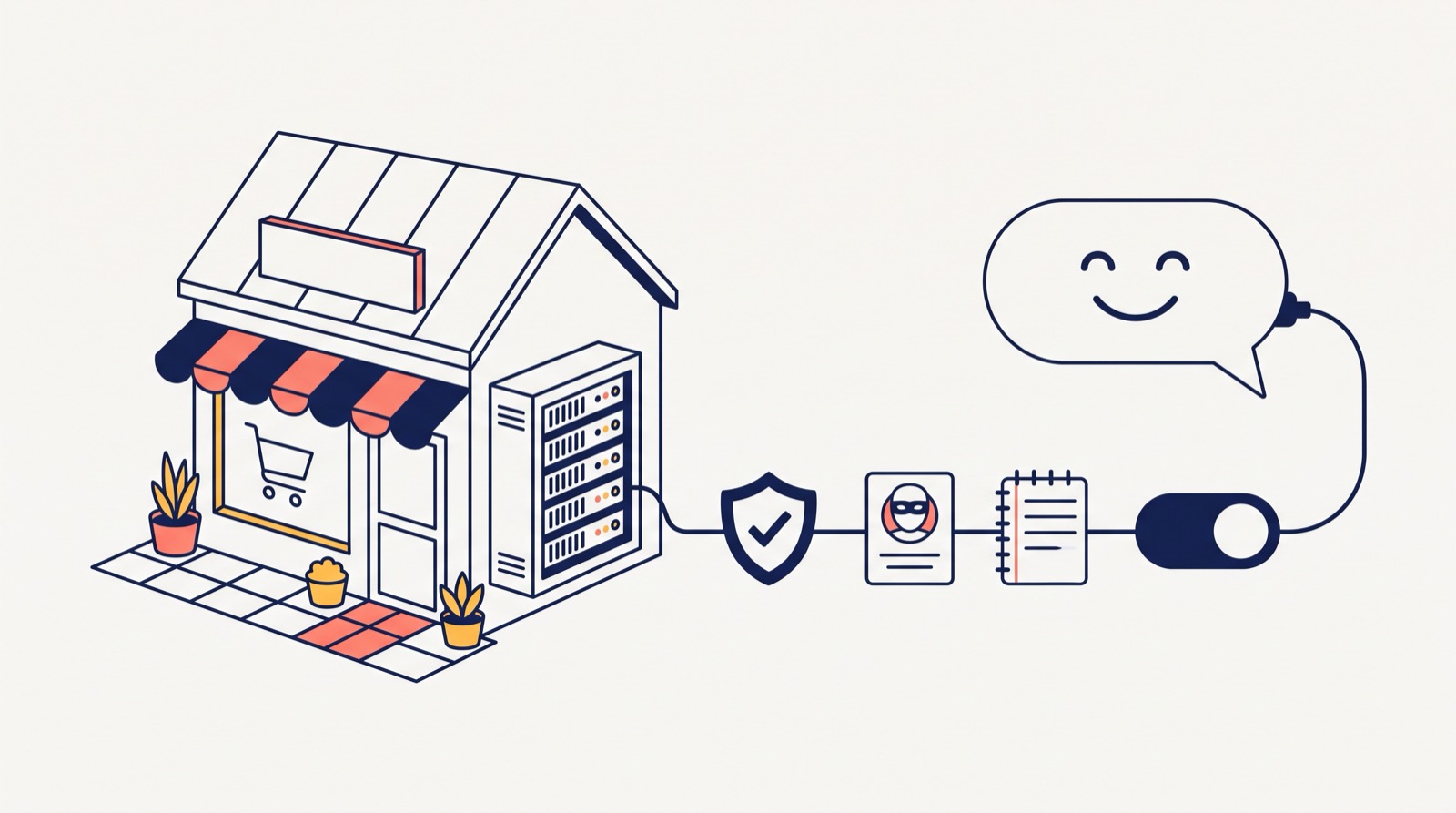
- Official — from the platform developer, updated together with the engine.
- Read-only for analytics: the assistant should not be able to change a price or an order status.
- Masking of customer personal data.
- OAuth sign-in with explicit owner consent, not a key in a settings file.
- A request log, so you can see what the assistant asked for and when.
- Off by default and disconnectable in one click.
How we built it at Turboshop
We went through this checklist during development and became one of the first Ukrainian e-commerce platforms with an official MCP server. The Turboshop MCP server is built into the store engine and has 18 read-only tools: sales, trends and breakdowns, orders, products and stock, abandoned carts, money at risk, content gaps, dictionaries and help search. There are four ready scenarios: morning brief, weekly report, money at risk and content audit. Customer personal data is masked, address and waybill numbers are not shared, sign-in uses OAuth 2.1 with owner confirmation, and every request is written to a separate log. We did not give the assistant the right to change anything: analytics can be trusted to AI today, while running the store should stay with a person.
FAQ
Is MCP a paid service? No, it is an open standard, like HTTP or USB. What can be paid is the AI assistant (a Claude or ChatGPT subscription) and connection services.
Do I need to know how to code? To write an MCP server, yes. To use a ready one, no: you paste the connection address into the connector settings and grant permission.
Does ChatGPT support MCP? Yes, ChatGPT connects custom connectors via MCP in developer mode; Claude does it via "Connectors" in settings.
Does the AI "learn" from my store data? The assistant receives data only at the moment of the question. How the service stores chat history depends on its own privacy settings — check them in your account.
What are an MCP client and an MCP host? The host is the app where you talk to the AI (for example, Claude). The client is the part of it that holds the connection to a specific MCP server. For a store owner the difference does not matter.
The AI assistant is just one of the platform's capabilities. If you are only planning to open an online store, see what else the Turboshop online store builder can do.
Summary
MCP is a common language between AI assistants and business systems. For an online store it means answers about sales, stock and money in a minute, without exports and without a programmer. The key is to choose an official server with read-only access and masking of personal data. Turboshop already has exactly such a server built into the platform, and we connect it individually.